
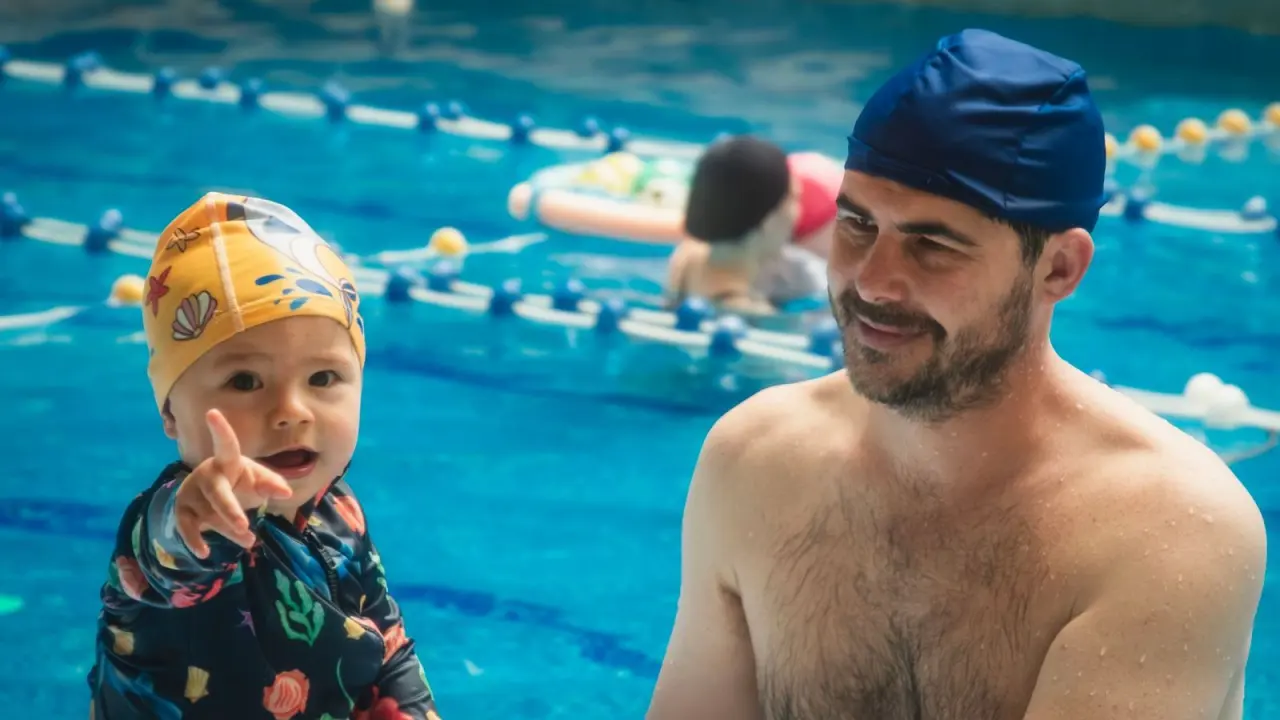
Worried about glancing away near water? The active supervision water watcher approach is simple: one named adult, eyes on the children, phone down, and within arm’s reach of toddlers.
This page sits within the wider topic of child water safety, and it looks at the supervision layer on its own.
| Key fact | Value |
|---|---|
| Drowning’s rank among causes of death, ages 1-4 | Leading cause |
| Drownings of children age 4 and younger that happened during non-swim times | 69% |
| Water depth in which a young child can drown | As little as an inch or two |
| Time a drowning can take | As little as 20-60 seconds |
| Distance for AAP “touch supervision” | Within arm’s length |
| Age before a child should bathe alone (AAP) | At least 6 years old |
These figures come from HealthyChildren.org (AAP) and a supervision-by-age guide from Stop Drowning Now. Figures can change, so check the source before you rely on them.
What does active supervision near water mean?
Active supervision means your full attention stays on the child whenever they are in or near water. The American Academy of Pediatrics (AAP) advises avoiding anything that makes focus harder, such as using your cell phone, doing yard work or drinking alcohol or using drugs.
That is different from simply being nearby. Drowning is quiet and fast: young children can drown in as little as an inch or two of water, and the AAP notes it can happen quickly and silently. A guide from Stop Drowning Now puts the time at as little as 20-60 seconds.
In practice, active supervision looks like this:
- Your eyes are on the water, not on a screen or a conversation.
- You are close enough to reach the child, and for toddlers that means within arm’s length.
- You are not mixing supervision with alcohol, drugs or chores such as yard work.
- You keep a phone nearby for calling for help, rather than for scrolling.
How does a water watcher work?
A water watcher is a designated adult whose only job is to watch the children in and around the water. A Stanford Medicine Children’s Health page advises you to actively supervise children around water at all times by assigning a water watcher and having a phone nearby to call for help in an emergency.
The idea turns a vague “someone is keeping an eye out” into a named person. Stop Drowning Now lists the same habit under focused adult supervision: assign a water watcher, and avoid phones and chats.
A simple routine for a family gathering or pool day:
- Name the water watcher out loud before anyone gets in the water.
- Agree that the watcher does nothing else: no phone use, no side conversations, no alcohol.
- Keep a phone within reach for emergencies only.
- When the watcher needs a break, hand the role to another adult in words, so the children are never covered by an assumption.
The point of the handover is that every moment has one person responsible, rather than several people each assuming someone else is looking.

Why a watcher is one layer, not the whole plan
The AAP recommends multiple layers of protection because no single method can prevent all drowning. Those layers work together and include barriers, supervision, water safety skills, life jackets, and being ready to respond with rescue and CPR.
Barriers matter because supervision has gaps. The AAP says barriers can help prevent tragedies during inevitable, brief lapses in supervision that are a normal part of every day. It also reports that 69% of drownings in children age 4 and younger happened during non-swim times, when they were not expected to be in the water.
That finding is why a watcher assigned for swim time cannot cover everything. A child who slips out of a door and reaches a pool or tub when nobody expects it needs a fence, a latch or a closed door in the way. Our guide to toddler drowning prevention goes further into those home layers.
Gear is not a substitute either:
- A Stanford Medicine Children’s Health page states that floatation devices are not a substitute for touch supervision.
- Stop Drowning Now says water wings, arm bands and inflatables are toys, not safety devices.
- The AAP says research suggests fencing can prevent more than half of all swimming pool drownings of young children.
Supervision by age
How close the watcher stays changes as children grow, but the need for attention does not go away. The Stop Drowning Now age guide sets out these levels:
- Babies (0-12 months): hands-on, within arm’s reach every second, even in the bath.
- Toddlers (1-4 years): stay in the water and within arm’s reach, with a dedicated water watcher who has no distractions.
- School-age (5-9): constant, close visual supervision, with arm’s reach and a life jacket for weak or inexperienced swimmers.
- Preteens (10-12): eye-to-eye supervision, the buddy system and life jackets for weak swimmers and all boating.
- Teens (13-17): risk rises again in the teen years, so the guide advises keeping an adult present.
For toddlers, the AAP adds a clear rule: during swim time, get in the water with your child. Some children need a plan shaped around their own needs, and our page on water safety for children with autism is a place to start.
Bath time and everyday water at home
Supervision is not only a pool issue. The AAP says most child drownings inside the home occur in bathtubs, usually during a lapse in adult supervision.
Its guidance is to stay within arm’s length at bath time and not to let children bathe alone until they are at least 6 years old. It also says not to let another young sibling supervise children under that age.
The Stanford Medicine Children’s Health home tips add small habits that support the person watching:
- Drain the tub immediately once bath time is over.
- Empty buckets, containers and wading pools right after use.
- Keep toilet lids closed and use toilet seat locks.
- Keep doors to bathrooms and laundry rooms closed.
Frequently asked questions
Can a life jacket or floatie replace a water watcher?
Show answer
No. The same Stanford page warns against blow-up devices such as arm floaties or neck rings because they can deflate. In the AAP’s layers, life jackets and supervision are separate protections, so one does not stand in for the other.
Should the water watcher use a phone?
Show answer
Not for anything except an emergency. The AAP lists using a cell phone among the things that make it hard to stay focused, while Stanford advises having a phone nearby to call for help.
Does a child who can swim need less supervision?
Show answer
Not according to the Stanford page, which says never to leave your child unattended in a tub or around any other body of water, even if he or she knows how to swim. Stop Drowning Now adds that lessons do not drown-proof any child.
How close should I stay to a toddler in the water?
Show answer
The AAP recommends staying within arm’s length, providing constant touch supervision, and getting in the water with your toddler during swim time. If you need to get out, it says to take your child with you.