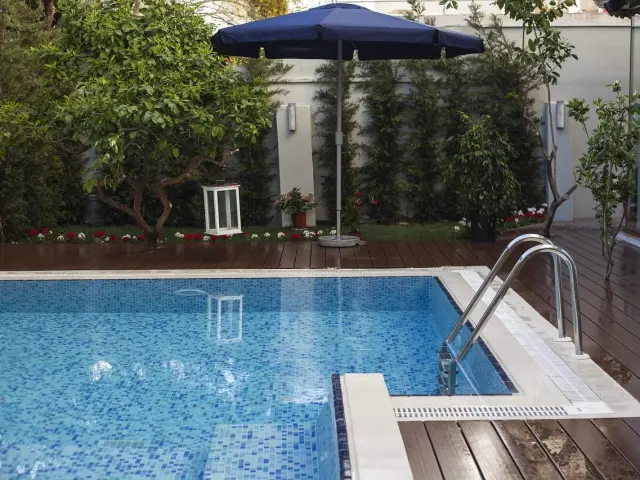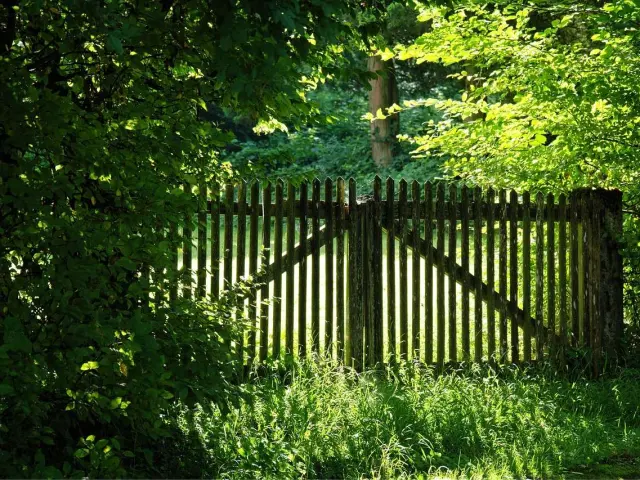
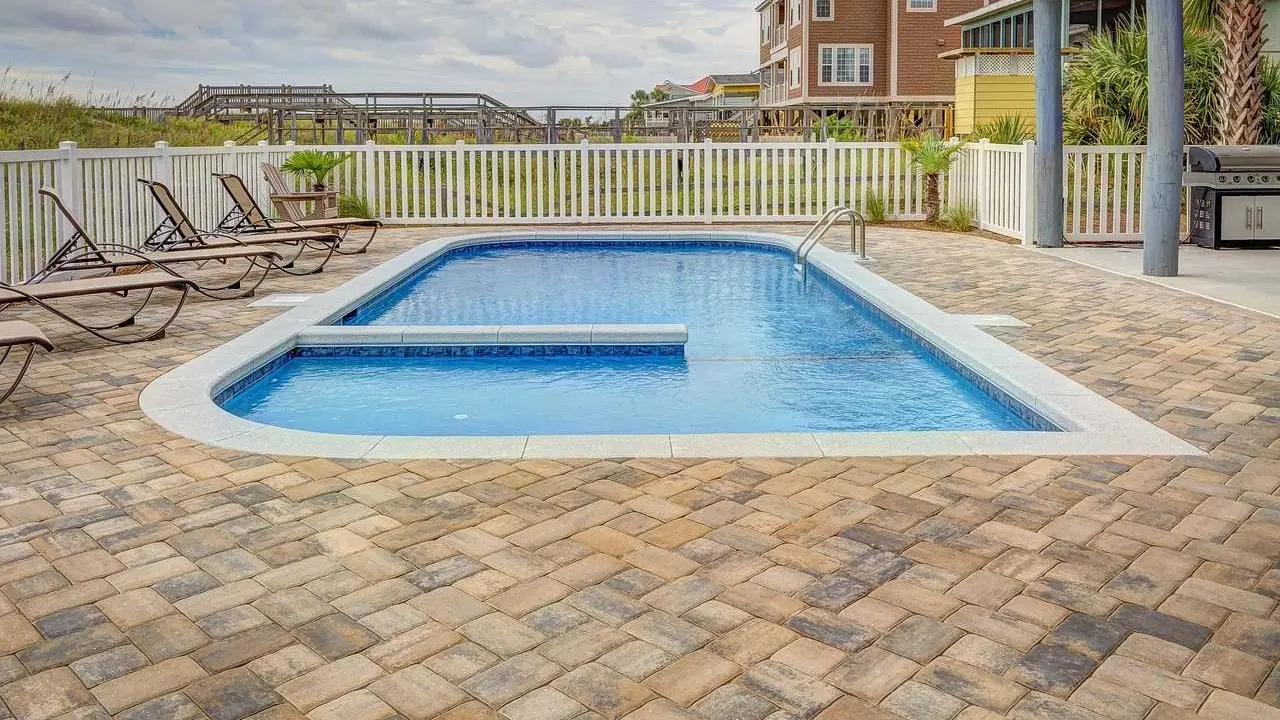
Worried about how to childproof a pool? No single fix does it. Layer a four-sided fence, a self-latching gate, alarms and a cover, then keep an adult watching.
This guide is part of the wider topic of child water safety, and it focuses on the physical barriers around a home pool.
| Item | Value |
|---|---|
| Minimum fence height (CPSC guideline) | 48 inches (4 feet) |
| Preferred fence height | 5 feet or higher |
| Maximum gap between vertical bars on a tall fence | 4 inches |
| Maximum gap within decorative cutouts | 1¾ inches |
| Children under 5 who drown in pools each year | Nearly 300 |
| Age group most affected | 1 to 3 years |
These figures come from the U.S. Consumer Product Safety Commission’s Safety Barrier Guidelines for Residential Pools booklet, and the layers framework comes from the Association of Aquatic Professionals position paper. Figures and local rules can change, so check the source before you rely on them.
Why one barrier is never enough
The CPSC states that barriers are not childproof. What they do is add protection for the moments when adult supervision lapses, and they give parents extra time to find a child. The same booklet says barriers can never replace adult supervision (CPSC).
The risk is real for small children. The CPSC says nearly 300 children under age 5 drown in swimming pools each year, and that the injuries and deaths involve children aged 1 to 3 in residential settings. It describes toddlers as inquisitive and impulsive, with no realistic sense of danger.
In its 2026 position paper, the Association of Aquatic Professionals (AOAP) defines a layer of protection as one of several independent safety measures that work together, so that if one fails the others still stand (AOAP). It lists six primary layers:
- Supervision: constant, undistracted adult attention whenever children can reach water.
- Barriers and access control: fences, gates, covers and alarms.
- Education and awareness, including CPR training.
- Water competency: knowing how to swim and survive in water.
- Emergency response preparedness.
- Regulation and policy enforcement.
Water risks are not limited to the backyard, and bath safety for babies is a separate topic that covers the indoor side of the picture.
Fence design: stopping a child going over, under or through
The CPSC booklet judges a barrier by whether a child can get over, under or through it. A barrier that completely surrounds the pool is better than a fence on three sides with the house serving as the fourth (CPSC).
On height, the guideline is a minimum of 4 feet, and fences 5 feet or higher are preferable. The top should be at least 48 inches above grade, measured on the outside of the barrier. The booklet notes that some states, counties or municipalities require 60 inches.
Climbing is the main design concern. Keep these points in mind when you check a fence:
- Remove handholds and footholds, such as indentations or protrusions a child could climb.
- Keep permanent structures, equipment and similar objects away from the fence so they cannot serve as steps.
- If horizontal rails sit less than 45 inches from the top, place them on the pool side of the fence.
- If the rails are 45 inches or more apart, they can sit on the outside, and the gaps between vertical bars should not exceed 4 inches.
- Gaps in decorative cutouts should not exceed 1¾ inches.
- Chain-link mesh openings should not exceed 1¼ inches square, and latticework openings should not exceed 1¾ inches.
The 1¾-inch figure is based on the foot width of a young child, which is meant to deny a toehold. The 4-inch figure reflects a child’s head breadth and chest depth, so a child cannot pass through or get stuck.
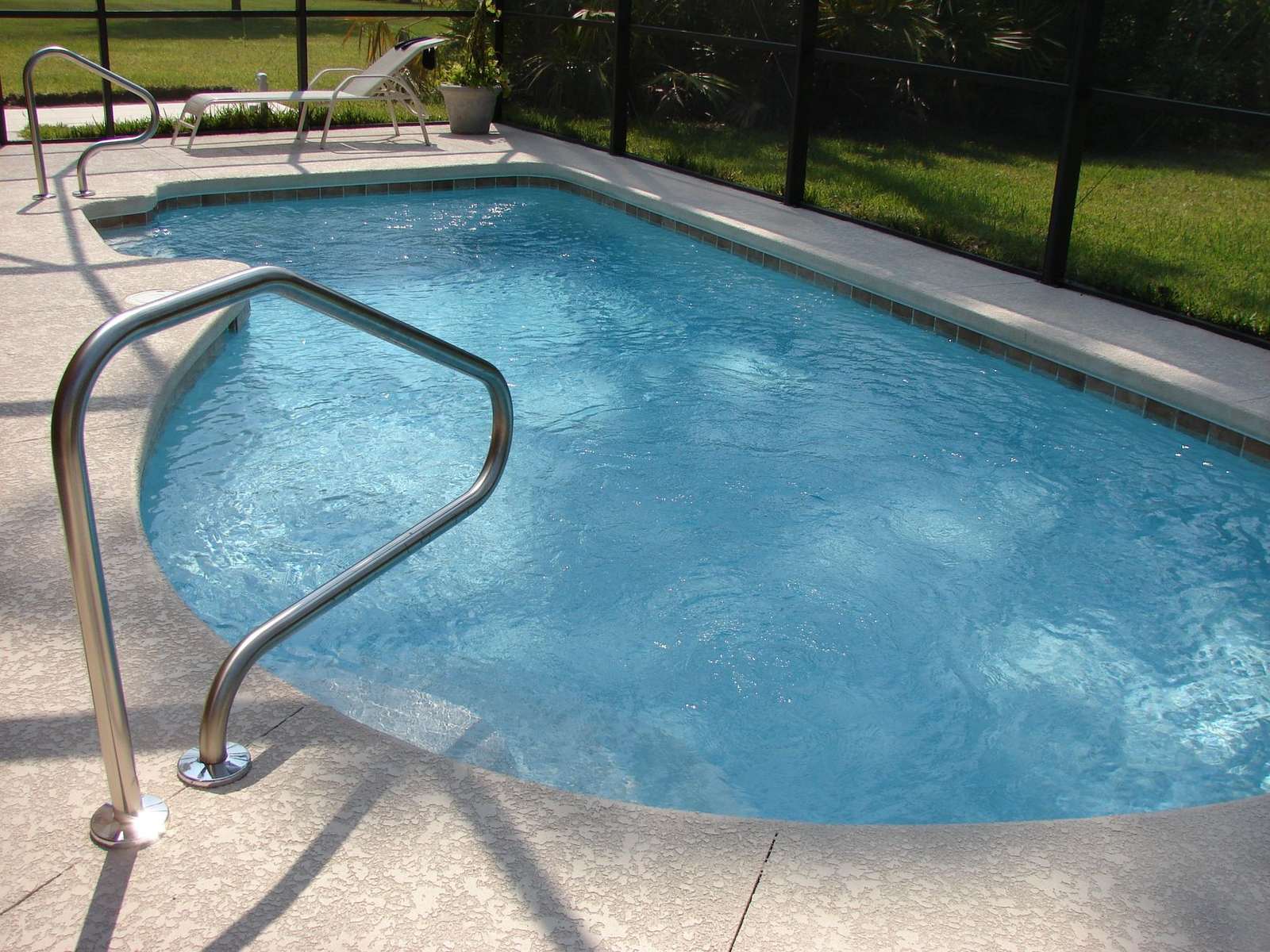
Gates, doors and the house wall
A fence is only as strong as its gate. The CPSC says many young victims could be saved if homeowners fenced their pools completely and installed gates with self-closing and self-latching devices.
If the house forms one side of the barrier, the booklet recommends door alarms on all doors leading to the pool area. Those doors should have self-closing and self-latching devices, or locks beyond the reach of children. The AOAP’s 2026 paper likewise recommends four-sided isolation fencing with self-closing, self-latching gates, plus alarms on doors, windows and pool covers (AOAP).
A quick routine helps catch failures early:
- Open the gate and let go. It should close and latch on its own.
- Test the door alarms and any locks placed out of a child’s reach.
- Look along the fence for anything a child could climb or squeeze through.
Covers, alarms and other extra layers
The CPSC lists the barrier types as a fence or wall, door alarms and a power safety cover. Pool covers add another layer of protection, but the booklet asks that they be well maintained and that their control devices be kept out of children’s reach.
Beyond barriers, the AOAP’s residential recommendations include supervising children at all times, teaching swimming and water competency skills, and keeping rescue equipment and a phone nearby. None of these replaces the others. Each one covers a gap the others may leave.
Do spas, above-ground and portable pools need barriers?
Yes, the CPSC’s definition of a pool includes spas and hot tubs. Its barrier guidelines therefore apply to them, as well as to above-ground pools and, possibly, larger portable pools (CPSC). The booklet adds that above-ground pools should have barriers.
An older edition of the booklet summarised the CPSC’s 2012 report. It found that portable pools accounted for 10 percent of fatalities among children younger than 15, an annual average of 40. It also found that most drownings and submersion injuries involving children younger than 5 occurred in pools owned by the family, friends or relatives (CPSC, older edition). That is a reminder that a neighbour’s or relative’s pool matters as much as your own.
Checking what your area requires
The CPSC guidelines are not a CPSC standard, and the booklet says they are not mandatory requirements. Some states and localities have built them into their building codes, so the booklet advises checking with your local authorities (CPSC).
As of the AOAP’s 2026 position paper, most states have adopted versions of the International Swimming Pool and Spa Code, which sets minimum standards for pool barriers, gates and alarms. The same paper says local codes may specify fence heights, typically 4 feet or higher, and gate requirements (AOAP). The details differ by place, so read the page on pool fence requirements alongside your local rules.
Frequently asked questions
Is a fence enough to childproof a pool?
Show answer
No. The CPSC says barriers are not childproof and cannot replace adult supervision. They work best as one layer among several, alongside gates, alarms, covers and supervision.
How high should a pool fence be?
Show answer
The CPSC guideline is a minimum of 4 feet, or 48 inches above grade, with 5 feet or higher preferable. Some places require 60 inches, so check your local rules.
Does a pool cover replace a fence?
Show answer
The CPSC describes covers as adding another layer of protection, not as a substitute. A cover should be well maintained, and its control device kept out of children’s reach.
Do the CPSC guidelines have legal force?
Show answer
On their own, no. They are advice, but some states and localities have folded them into building codes, so your local authorities decide what binds you.
Do hot tubs need the same protection?
Show answer
The CPSC’s definition of a pool includes spas and hot tubs, so its barrier guidelines apply to them too.