
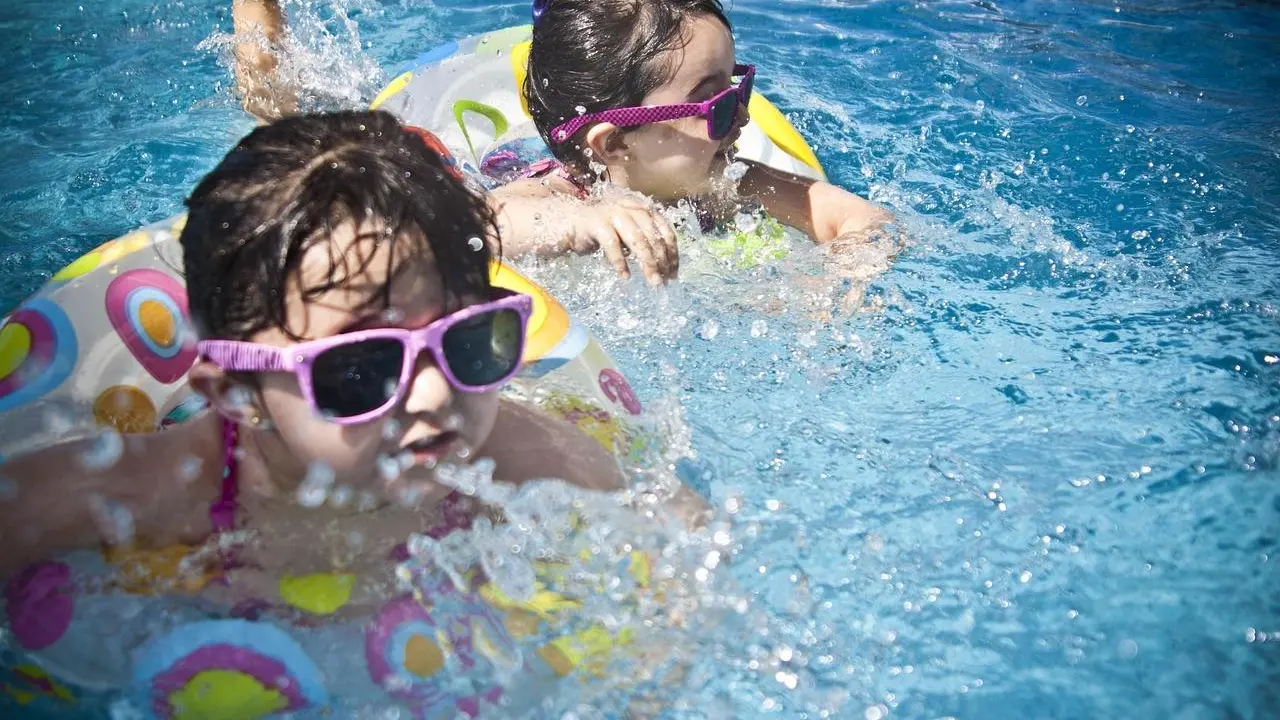
You want your child to enjoy the pool, and arm floaties look like an easy fix. So, are floaties safe for kids?
This page sits within the wider topic of child water safety.
| Item | Value |
|---|---|
| Drowning rank, children aged 1 to 4 | Number one cause of death |
| Drowning rank, ages 5 through 14 | Second leading cause of preventable death |
| Drowning rank, children younger than age 1 | Third leading cause of preventable death |
| Safe age to use water wings as drowning prevention | None, per the National Safety Council |
| Flotation device experts recommend | U.S. Coast Guard-approved life jacket |
| Supervision for a child who can’t swim | Touch supervision, within arm’s reach |
These figures come from a July 2019 Romper report that quotes the American Academy of Pediatrics and the National Safety Council. Statistics and guidance can change, so check the source before you rely on them.
Why parents reach for arm floaties
Inflatable arm bands have been used as swimming aids for children since the 1960s, according to a July 2011 ABC News 4 report. They stay popular because they look like a comfortable alternative to a life jacket, and they seem to give a child more freedom to move without buckles and straps.
That comfort is the appeal, but it is not the same as protection. The same 2011 report notes that the label on the most popular brand states the arm bands are not to be used as a lifesaving device, and that the brand’s website recommends constant supervision.
Why experts say floaties are not safety devices
Safety experts quoted in the July 2019 Romper report are direct. A National Safety Council program manager said there is no safe age to use water wings as a form of drowning prevention. The reasons they gave come down to how the product behaves in the water:
- Water wings can slip off, and if one slips off a child’s arm it can throw the child face first into the water.
- They are cheap, so they can deflate.
- A child’s arms stay above the water, but the face can still end up in the water, which can result in drowning.
- They can give a child a sense of overconfidence, so the child may jump in without anyone watching.
The same report quotes the CDC website, which says air-filled or foam toys are not safety devices. It names water wings, noodles and inner-tubes, and says they should not be used instead of life jackets.
What does a life jacket do that floaties don’t?
A Safe Kids coordinator quoted in the 2019 Romper report explained that Coast Guard approval means a life jacket has been tested and is known to be buoyant enough to keep the head above water. That is the key difference: a tested life jacket is built to support the whole body, while floaties only hold up the arms.
A pediatrician quoted in the July 2011 ABC News 4 report put the test in simple terms. A flotation device should do three things:
- Keep your child from going under the water.
- Keep the face out of the water.
- Keep the head upright.
In his words, that essentially means a U.S. Coast Guard approved life jacket or personal flotation device. Fit and the manufacturer’s instructions still matter, so check them before every swim.
Are floaties safe for kids learning to swim?
Many people assume they do, but swim instructors quoted in the 2011 ABC News 4 report disagree. One swim school owner said arm bands teach kids to jump in and let the floats pop them back up to the surface, rather than trusting the water to float them.
He added his belief that arm bands work against what a child has learned in swim lessons. Another swim school owner in the same ABC News 4 report said the bands can give you and your child a false sense of security. These are the views of the people quoted, and they echo the overconfidence concern that other experts raise.
Hybrid products and the owner’s manual
Some newer products blur the line between water wings and life jackets. The July 2019 Romper report mentions the Puddle Jumper, described as a water wing and life jacket hybrid that the Coast Guard considers a Type III personal flotation device, “approved for calm waters where fast rescue is expected,” according to the product’s website. You can read that report at Romper.
The Safe Kids coordinator in that report urged parents to read any owner’s manual that comes with a device to confirm what it is rated and intended for. A rating for calm water with a fast rescue is not a rating for every pool, lake or beach.
Supervision matters more than any device
According to the 2019 Romper report, the best protection is constant, undistracted supervision, because drowning is silent and very quick. The American Academy of Pediatrics advice quoted there depends on the child’s size and skill:
- For the littlest children who don’t swim, keep your hands on them in the water.
- For a slightly older child, use a Coast Guard-approved vest and stay within arm’s reach.
- During swim time, get in the water with your child, and if you get out, take them with you.
The same rules apply at home, and the guide to inflatable pool safety looks at that setting. Some children also need extra planning around water, so families can read about water safety for children with autism in a separate guide.
Frequently asked questions
Is there an age when floaties are safe?
Show answer
According to a National Safety Council program manager quoted in the July 2019 Romper report, there is no safe age to use water wings as a form of drowning prevention.
Can my child wear floaties if I stay close?
Show answer
Staying close is good practice, but it does not make floaties a safety device. The July 2011 ABC News 4 report says the most popular brand’s label states the bands are not a lifesaving device.
What should my child wear instead of floaties?
Show answer
Experts quoted in the 2019 Romper report recommend a U.S. Coast Guard-approved life jacket. Read the owner’s manual to confirm what it is rated for.
Are pool noodles and inner tubes any safer?
Show answer
The CDC website, as quoted in the July 2019 Romper report, says air-filled or foam toys such as noodles and inner-tubes are not safety devices and should not replace life jackets.