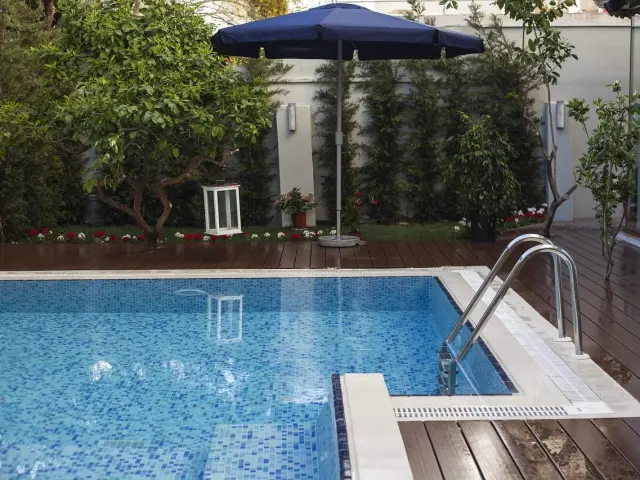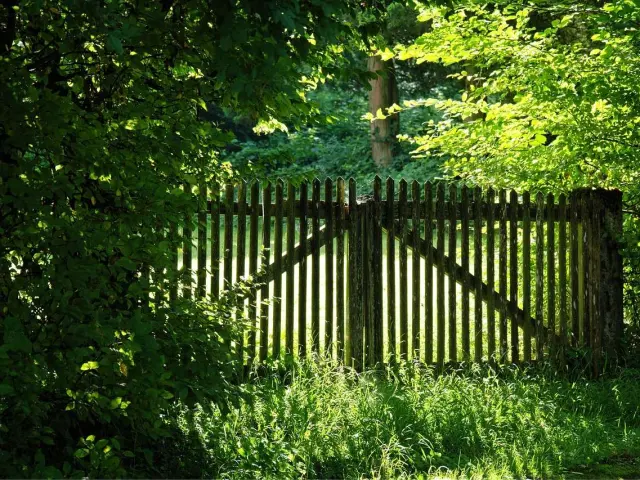
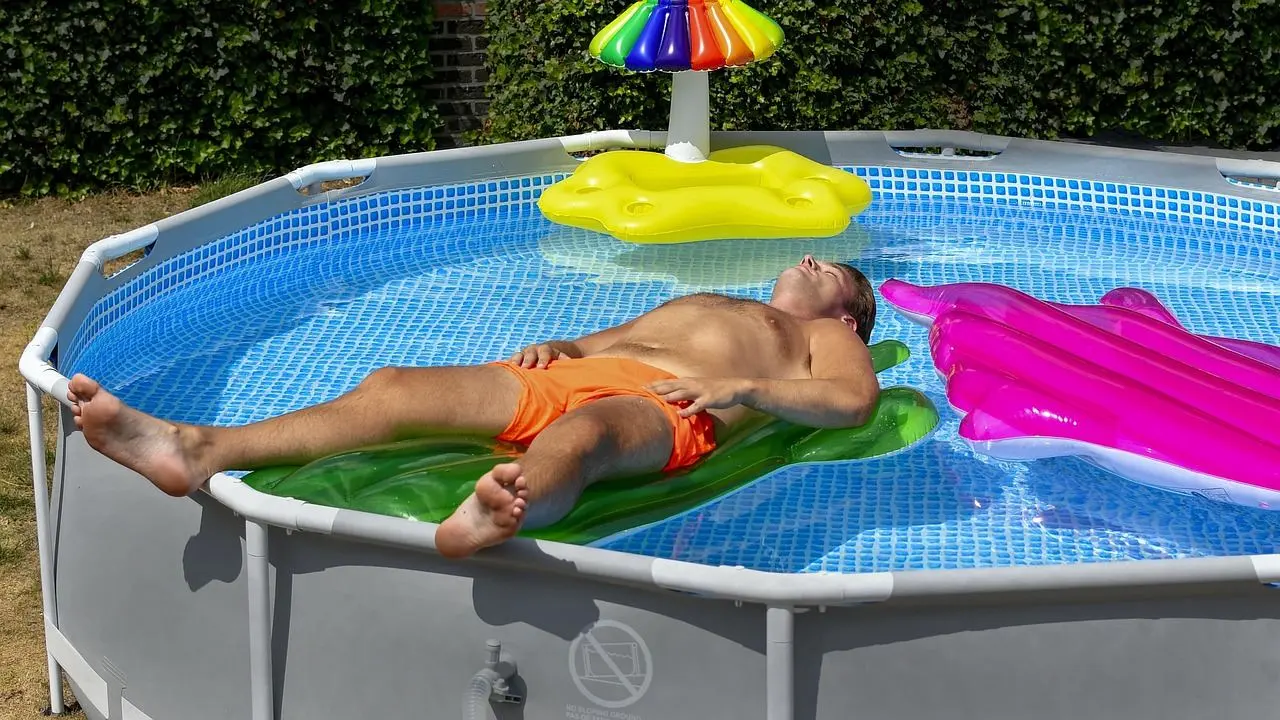
Worried about the blow-up pool in your backyard? Good inflatable pool safety comes down to three habits: empty and put away small pools after every use, fence or cover larger ones, and keep a close watch.
This page is one part of the wider topic of child water safety and focuses on inflatable and kiddie pools.
| Item | Value |
|---|---|
| Portable pool drowning deaths, children 4 and under (average, 2005 to 2008) | 35 deaths per year |
| Child drownings where the child was not expected to be at or in the pool (Arizona, California, Florida study) | Nearly 70% |
| Children in that study last seen inside their home | 46% |
| Recommended minimum pool fence height | At least 4 feet |
| Recommended minimum gate latch height | At least 54 inches |
The figures come from the CPSC portable pool publication and the American Academy of Pediatrics guidance on HealthyChildren.org. They can change, so check the source before you rely on them.
Why inflatable pools are risky for young children
The U.S. Consumer Product Safety Commission (CPSC) warns of an increasing number of deaths in inexpensive, inflatable pools. Its inflatable pool safety publication also reports that an average of 280 children under 5 drown each year in swimming pools of all kinds.
The design is part of the problem. The sides of inflatable pools are flexible and sometimes slanted or low, so it may be easier for a child to climb inside.
Portable pools vary widely, from tiny blow-up pools to larger designs that hold thousands of gallons of water. The CPSC’s portable pool sheet reports that from 2005 to 2008, submersion fatalities associated with portable pools averaged 35 deaths each year for children 4 and under.
A child does not have to be swimming to be at risk. In a CPSC study of drownings among children age 4 and under in Arizona, California and Florida, nearly 70% of the children were not expected to be at or in the pool, and 46% were last seen inside their home, the AAP reports. Children can slip away from the watchful eyes of adults in seconds.
A routine for every inflatable pool session
The CPSC’s portable pool tips fit into a short routine you can repeat each time.
- Check your local rules, because local building codes may require barriers like fences around these pools.
- Fence the pool, and encourage your neighbors to do the same.
- Once the pool is set up, ensure high levels of supervision.
- Keep toys out of the pool area when it is not in use.
- When swimming ends, empty and put away smaller pools. For larger pools, cover them and put access ladders away when adults are not present.
Emptying and storing a small pool after every use removes the water hazard altogether, which is why it comes first among the CPSC’s tips for smaller pools.
How should a fence around a portable pool look?
The AAP calls fences the most effective, proven way to prevent drowning of young children, and says pool fences are for all pools, including permanent in-ground pools. Its fence recommendations are:
- At least 4 feet high, completely surrounding the pool and separating it from the house and the rest of the yard.
- Climb-proof, with no footholds, handholds, or nearby objects such as lawn furniture or play equipment a child could use to climb over.
- No chain-link if you can avoid it, since it is very easy to climb. If it is used, openings should be 1¾ inches or smaller.
- Vertical slats with no more than 4 inches of space between them.
- A self-closing, self-latching gate that only opens out, away from the pool, with the latch at least 54 inches from the ground.
Rules differ by place. The AAP says only some individual states and municipalities have laws requiring pool safety fences and that there is no national pool fence law, while the CPSC notes that local building codes may require barriers around inflatable pools. Ask your local authority what applies where you live.
Layers of protection that work together
The AAP stresses using multiple layers of protection, since no single step can prevent all drowning. Pairing a barrier with other safeguards covers the gaps each one leaves.
- A fence around the pool.
- A pool cover on bigger portable pools, plus ladders stored away whenever no adult is around.
- Alarms on doors leading from the house to the pool area that alert you when someone enters it.
- Close supervision whenever the pool is set up.
- Neighbors, babysitters and visitors who know the pool is in your yard.
Drowning is silent, and children can drown within seconds, with barely a splash. Pool alarms can detect waves on the water’s surface, but they do not always work with children because they may not make enough waves. Treat an alarm as a backup to the barrier rather than a stand-in for it, and keep its batteries fresh.
Other homes, other adults and basic skills
Many drownings among young children take place at the home of a friend, relative or neighbor. Whenever your child will be in someone else’s home, the AAP advises checking for ways your child could reach a pool or other hazards.
Teach children to swim and learn other basic life-saving skills, but do not consider young children “drown-proof” because they have had swimming lessons. The CPSC also advises you to learn and practice CPR so you can help in an emergency. A separate guide looks at the question are floaties safe for kids in more detail.
Shallow water matters beyond pools, too. Another way small children meet water at home is covered in the page on the bucket drowning hazard.
Frequently asked questions
Do I need to empty an inflatable pool after every swim?
Show answer
The CPSC advises emptying and putting away smaller portable pools after every use. For larger pools, it advises covering them and putting access ladders away when adults are not present.
Does an inflatable pool need a fence?
Show answer
It depends on where you live. The CPSC says local building codes may require barriers like fences around these pools, and the AAP says there is no national pool fence law, so check your local rules.
Can a pool alarm replace a fence?
Show answer
No. The AAP says alarms are an added layer and none is a substitute for a properly installed pool fence.
Do swimming lessons make a young child safe in a pool?
Show answer
No. The CPSC says not to consider young children “drown-proof” because they have had swimming lessons, so supervision and barriers still matter.
Why do children get into pools unnoticed?
Show answer
Children can slip away from adults in seconds. In the CPSC study the AAP describes, 46% of the children were last seen inside their home.