Picture someone pulled from the water who isn’t breathing. For cpr for drowning victims, start CPR at once and include rescue breaths with chest compressions, as the joint AHA and AAP guidance advises.
This page sits within the wider topic of drowning prevention, where CPR is one layer among several.
| Item | Value |
|---|---|
| Guidance issued | AHA and AAP joint update, November 2024 |
| Presume cardiac arrest when | No normal breathing or consciousness after removal from the water |
| CPR approach | Rescue breaths plus chest compressions |
| Recommended pulse-check window | 10 seconds (pulses are hard to palpate accurately) |
| Drowning share of injury deaths worldwide | 7% |
| Estimated drowning deaths worldwide | Approximately 236,000 per year |
These figures come from MDedge Pediatrics and a summary of the guidance on a third-party blog. Figures and recommendations can change, so check the source before you rely on them.
Why rescue breaths matter after drowning
Drowning usually starts with a lack of air, not a heart problem. The AHA and AAP update explains that it generally advances from respiratory arrest caused by submersion-related hypoxia to cardiac arrest.
A physician quoted in a summary of the guidance put it this way: Cardiac arrest following drowning is most often due to severe hypoxia, or low blood oxygen levels. A sudden cardiac arrest from a cardiac cause is different, because the person generally collapses with fully oxygenated blood. That summary is the source of both points.
This is why the update’s authors wrote that resuscitation after drowning must focus on restoring breathing as much as it does circulation. They also noted that telling respiratory arrest from cardiac arrest is hard, because pulses are difficult to palpate accurately within the recommended 10-second window, according to MDedge Pediatrics.
What the AHA and AAP update says
In November 2024 the American Heart Association (AHA) and the American Academy of Pediatrics (AAP) issued recommendations on resuscitation after drowning. It was the first collaboration between the two organizations on the topic, and the recommendations were published simultaneously in Circulation and Pediatrics, as MDedge Pediatrics reported.
The update includes two key principles:
- Anyone pulled from the water who has no signs of normal breathing or consciousness should be presumed to be in cardiac arrest.
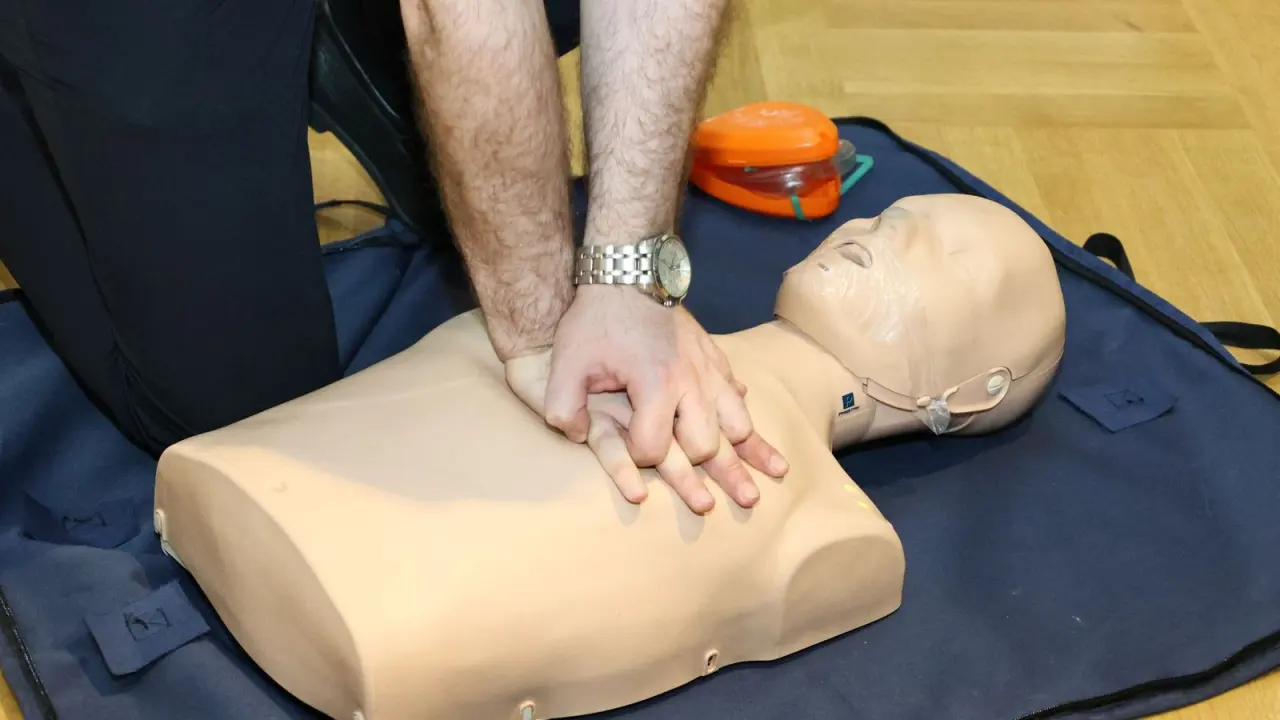
- Rescuers should immediately start CPR that includes rescue breathing in addition to chest compressions.
The recommendations rest on systematic reviews from 2021 to 2023 by the International Liaison Committee on Resuscitation. Multiple large studies show that more people with cardiac arrest from noncardiac causes, such as drowning, survive when CPR includes rescue breaths compared with hands-only CPR, according to the same report.
The basic sequence for CPR after a drowning
The steps below follow the points in the 2024 reporting. They are an overview, not a replacement for a hands-on course with a qualified instructor.
- Protect yourself first. The guidance aims to balance rapid rescue and resuscitation with rescuer safety.
- Get the person to land or a boat. Trained rescuers may begin rescue breathing in the water when it can be done safely, and chest compressions follow once the person and the rescuer are on land or in a boat.
- Check for normal breathing and consciousness. If both are absent, presume cardiac arrest.
- Call for help. Calling the local emergency number, 911 in the United States, is an early step alongside compressions.
- Start CPR with rescue breaths and chest compressions. Do not wait before beginning.
- Use an AED if one is available. It should not delay CPR.
- Keep going until help arrives.
These points are drawn from the MDedge Pediatrics report and the blog summary. A pediatrician who was not part of the update said that learning CPR is a large part of protecting children around water.

What if you are untrained or unable to give breaths?
The recommendations say that someone who is untrained, unwilling or unable to give breaths can perform chest compressions until help arrives. Hands-only CPR is described as calling 911 and pushing hard and fast in the center of the chest.
That option exists so that nobody stands by doing nothing. The evidence still favors CPR with rescue breaths for drowning, so trained and willing rescuers should include them. Both statements come from MDedge Pediatrics.
AEDs, oxygen and public-access programs
The update also covers topics the AHA had not previously addressed with treatment recommendations, as of the November 2024 publication. These are oxygen administration after drowning, automated external defibrillator (AED) use in cardiac arrest after drowning, and public-access defibrillation programs, per MDedge Pediatrics.
A summary of the guidance says public aquatic facilities should have AEDs available. An AED should not delay CPR, but it can be critical if a cardiac event triggered the drowning, according to the blog summary.
CPR is the last layer: prevention comes first
The update’s authors note that drowning is the third leading cause of death from unintentional injury globally, at 7% of all injury-related deaths. In the United States, it is the leading cause of death in children aged 1-4 years and the second leading cause of unintentional injury death in children aged 5-14 years, per MDedge Pediatrics.
A summary of the guidance cites approximately 236,000 lives lost each year and research indicating that over 90% of drownings are preventable. It adds that drowning can happen quickly and quietly, with victims often unable to call for help or signal distress, according to the blog summary.
A pediatrician who was not part of the update described several layers of protection:
- Touch supervision, which means staying within arm’s length
- Secure fencing
- Access to appropriate life jackets
- Teaching children to swim
Rescuer safety is a theme of the guidance, and the reach throw don’t go rescue page looks at helping from outside the water. People who find themselves in trouble in the water may also want to read about the float to survive technique, which belongs to the same layered approach.
Frequently asked questions
Do rescue breaths really matter for drowning?
Show answer
Yes. Drowning typically begins with low oxygen, and the AHA and AAP update says resuscitation must focus on restoring breathing as much as circulation. Multiple large studies show better survival when CPR includes rescue breaths.
Is hands-only CPR acceptable for someone pulled from the water?
Show answer
If a person is untrained, unwilling or unable to give breaths, the recommendations say they can perform chest compressions until help arrives. CPR that includes breaths is the preferred approach for trained rescuers.
Should I wait for an AED before starting CPR?
Show answer
No. According to a summary of the guidance, an AED should not delay CPR. It can be critical if a cardiac event triggered the drowning.
Can CPR begin while the person is still in the water?
Show answer
The update says resuscitation may begin in the water with rescue breathing when trained rescuers can provide it safely. Chest compressions continue once the person and the rescuer are on land or in a boat.