Thinking of cooling off in a river? River swimming safety comes down to respecting hidden currents, cold water and underwater debris, and wearing a life jacket. Check conditions before you go.
This guide sits within our wider collection of water safety tips and focuses on rivers.
| Key fact | Value |
|---|---|
| Depth of water in which a current can knock you off your feet | As little as six inches |
| Suggested distance from the water when hiking beside a river | 6ft |
| Speed of heat loss in cold water compared with cold air | 25 times faster |
| International whitewater difficulty scale | Class I to Class V |
These figures come from the National Park Service’s river and stream guidance and OPB’s July 2025 report on cold rivers. Figures can change, so check the source before you rely on them.
Why river swimming is not like pool swimming
Rivers can look calm, warm and shallow. The National Park Service says that every year even the most experienced visitors fall victim to deceptively strong currents, cold water and unexpected changes in depth, as set out in its river and stream safety guidance.
A pool has a known depth and a clear bottom. A river offers neither. UC Davis Health notes that in Northern California, rivers carry dirt down from the mountains, which makes the water cloudy and brown so you can’t see the bottom.
Park officials list these unseen hazards:
- Strong undercurrents that can pull under even a strong and experienced swimmer.
- Strainers and blockages such as trees and debris.
- Narrow gaps between rocks that can trap you under water.
- A slippery, uneven bottom that makes it easy to lose your footing.
- An unstable riverbank, especially during and after floods and heavy rain.
In a June 2024 post, UC Davis Health cited a May 2024 report from the Centers for Disease Control and Prevention. After decades of decline, 4,500 people died of drowning each year from 2020-2022.
How do currents and strainers trap swimmers?
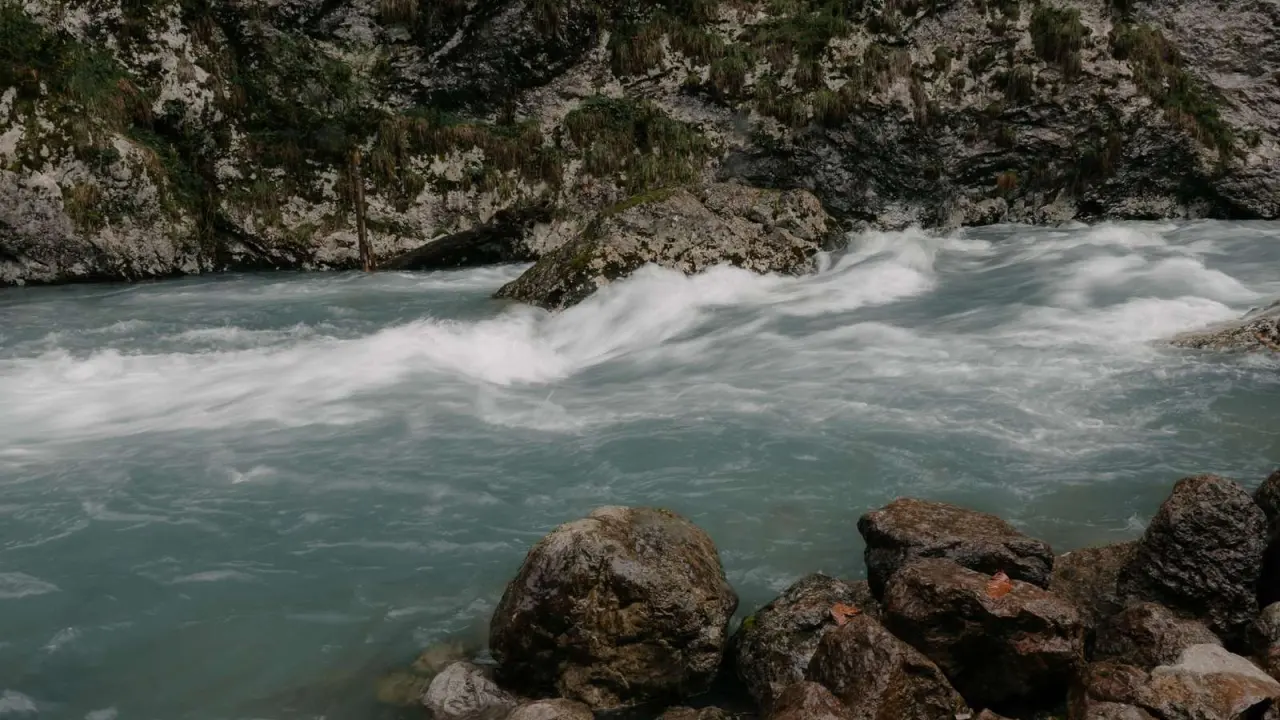
A current is simply water moving in a river or stream, and it can be powerful even when the surface looks calm. The National Park Service warns that in as little as six inches of water, a current can be strong enough to knock you off your feet and sweep you downstream.
Water levels change the picture. Low levels slow the flow, while snow melt or flooding can turn a calm river into raging rapids.
A strainer is a branch or blockage that acts like a sieve: water passes through, but people, boats and gear do not. Trees and debris can leave you trapped underwater or pinned against the object.

If a current catches you, Water Safety USA advises that you do not fight it. Swim across the flow to reach safety downstream. The same guidance says not to swim in whitewater and to stay away from high water in flooded rivers, streams, ditches and canals.
Rapids are rated on an international standard, from Class I (fast water with small waves) to Class V (extremely difficult, very violent rapids). The National Park Service says you should have the skills to navigate rapids safely before you attempt whitewater sections of a river.
Cold water: shock, hypothermia and misleading summer heat
Hot air does not mean warm water. Rivers and streams are typically fed by melting snowpacks, and OPB reported in July 2025 that the National Weather Service warns of cold shock: an involuntary reaction to sudden immersion that makes the body gasp for air and accidentally inhale water.
The same report says cold water can drain body temperature 25 times faster than cold air. That puts even strong, experienced swimmers at risk of cold shock and hypothermia.
A UK local authority, St Helens Borough Council, says that even on very warm days rivers and canals contain water barely above 10 degrees. It adds that sudden immersion can be deadly in a matter of seconds.
The National Park Service explains that hypothermia occurs when your body loses heat faster than it is produced and can no longer warm itself. OPB’s report suggests these habits:
- Enter cold water gradually rather than jumping or diving right in.
- Wear a properly fitted life jacket.
- Swim sober.
- Swim during daylight hours, never in the dark.
For a cold-water health emergency, officials recommend moving the person to a warm area, contacting 911 immediately and removing wet clothing.
Debris, drop-offs and slippery banks
UC Davis Health explains that fast current often washes away riverbanks, creating sudden drop-offs. You may wade out comfortably for a while, and the next step can still be much deeper.
Water Safety USA lists drop-offs, rocks, trash, debris, weeds, stumps and muddy bottoms as underwater hazards, and calls diving into unknown water extremely dangerous. It also notes that murky water makes it difficult to find someone who submerges, according to its swim area safety summary.
Getting out can be as hard as getting in. St Helens Borough Council points to debris such as shopping trolleys, broken glass and cans that can cause injury or trap you, and to steep or slimy banks that are very difficult to climb out of.
Check the water itself, too. OPB lists warning signs of a toxic algal bloom:
- Changing colours, including red, dark green, blue and brown.
- Thick or chunky water.
- Cloudy or hazy water.
- Unpleasant smells.
If the water looks or smells suspicious, stay away. Still water brings its own set of hazards, which are covered in our guide to lake swimming safety.
Habits that lower your risk
No single habit removes the danger, but together they help. These steps draw on the National Park Service, Water Safety USA and UC Davis Health:
- Wear a life jacket. Water Safety USA recommends one for swimmers of all abilities in moving water. Tubes, air mattresses and “floaties” are toys, not substitutes.
- Don’t swim alone. Someone nearby can help you or call 911.
- Watch children constantly. UC Davis Health says children can drown in 2 inches of water, and suggests switching the designated watcher every 15 minutes.
- Check conditions first. The National Park Service advises checking the park’s website for water and weather conditions before you head out.
- Cross with care. Never cross above rapids or falls, and unbuckle your pack’s waist strap so you can shed it if you fall.
Local rules differ. As of UC Davis Health’s June 2024 post, Sacramento County required children under age 13 to wear a life jacket before getting into any public waters.
When hiking beside a river, the National Park Service says to stay on established trails and keep 6ft from the water. For planning beyond rivers, our open water swimming safety tips cover more ground.
What to do if someone is in trouble
St Helens Borough Council is blunt: never enter the water to try to help a person or animal, because you could get into difficulty yourself. Its Call, Tell, Throw advice works like this:
- Call for emergency help (999 in the UK; UC Davis Health advises 911 in the US).
- Tell the person in difficulty to float on their back.
- Throw something that floats, or that they can hold onto.
UC Davis Health adds that from open water you can reach towards the person with a pole, branch or paddle. If they are pulled out and do not respond, start CPR.
If you fall in unexpectedly, remember Float to live. Fight your instinct to thrash around, lean back and extend your arms and legs, and float until you can control your breathing. Only then call for help or swim to safety.
Frequently asked questions
Can a strong swimmer still get into trouble in a river?
Show answer
Yes. The National Park Service says even the strongest swimmers can drown, and UC Davis Health notes that even the strongest swimmers can be pulled under by river current.
Why is river water cold in summer?
Show answer
Rivers and streams are typically fed by melting snowpacks, so high air temperatures don’t necessarily translate to warm water, according to OPB’s July 2025 report.
Is a tube or air mattress a safe alternative to a life jacket?
Show answer
No. Water Safety USA describes floats such as tubes, air mattresses and “floaties” as toys that should never be considered substitutes for a life jacket.
What should you do if a river current carries you away?
Show answer
Don’t fight it. Water Safety USA advises swimming across the flow to reach safety downstream, and the “Float to live” approach from St Helens Borough Council can help you control your breathing first.