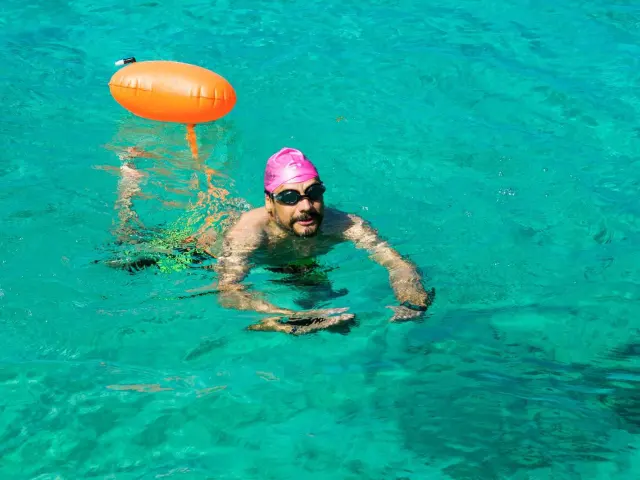
If you’re planning a day near water, these water safety tips can help you keep everyone safe. The short answer: assign one adult to watch, within arm’s reach of young children, and never swim alone.
| Item | Value |
|---|---|
| Fatal drownings per day in the United States | 11 |
| Near drownings per day in the United States | 22 |
| Depth of water in which a baby can drown | 1 inch |
| Minimum height of a fence around a home pool | 48 inches |
| Maximum gap between fence slats | 4 inches |
| Minimum water depth before diving | 9 feet |
These figures come from Mass General Brigham and University Hospitals. Figures can change as the sources are updated, so check the source before you rely on them.
Why drowning is quick and quiet
Drowning is the single-leading cause of death among children ages 1-4 and a top cause of death among teens, according to Cincinnati Children’s injury prevention page. The same page describes drowning as quick and silent, but preventable.
Stanford Medicine Children’s Health reports the same ranking for US children ages 1-4, citing the American Academy of Pediatrics and CDC WISQARS. It also lists a pool statistic attributed to the American Academy of Pediatrics: 69% of children younger than 5 years were not expected to be in the pool. The lesson is that a barrier matters even when nobody expects a child nearby.
Water does not have to be deep or wide to be dangerous. Mass General Brigham notes 11 fatal drownings and 22 near drownings every day in the United States, and says drownings happen in toilets, bathtubs, buckets, fountains, baby pools and wells as well as in large bodies of water.
The wider picture of how drowning happens and how it is stopped sits in the guide to drowning prevention. Families with young children can go further with the guide to child water safety.
Supervision: the habit that comes first
The pediatric health pages behind this guide put supervision ahead of every other step. A Mass General Brigham physician says one of the most effective methods is a system in which every child has an assigned adult, so nobody assumes someone else is watching.
- Name a water watcher. Cincinnati Children’s describes this as an adult paying constant attention to children in water.
- Hand off, don’t drift. If the watcher needs the bathroom, Mass General Brigham says they should hand off the job to the next person or pull the children out of the water.
- Put the distractions down. UF Health says supervising adults should not be reading, talking on the phone or doing anything else that keeps them from watching. Keep a phone nearby only to call for help, as Stanford Medicine Children’s Health advises.
- Stay close. Toddlers and young children need a supervising adult within arm’s reach at all times, according to Mass General Brigham.
- Use a buddy system for older kids. Mass General Brigham suggests buddies, set check-in times and plenty of water to drink so teens don’t tire.
For children who cannot swim independently, Cincinnati Children’s says an adult should be in the water, within arms’ reach. Stanford’s pool guidance puts it simply: if a child is in the water, so should the parent.
Adults have a part to play too. UF Health advises against drinking alcohol before or during swimming, boating or water skiing, and against drinking alcohol while supervising children around water.
Pool and hot tub safety
A home pool needs layers of protection, because no single measure covers every lapse. The first layer is a fence that fully encloses the pool, as Mass General Brigham recommends.
University Hospitals, drawing on American Academy of Pediatrics guidance, gives these fence details:
- The fence should separate the pool from the house and the play area of the yard.
- Fencing must be at least 48 inches tall.
- Spacing between slats should be no more than 4 inches.
- For chain-link fences, the diamond shapes should not be bigger than 1 3/4 inches.
- The gate should be self-closing and self-latching, with latches above a child’s reach, and should open away from the pool.
UF Health gives a similar height of 4 feet (120 centimeters) or higher, with a self-closing latch out of children’s reach. Stanford adds that mesh fencing is preferred so that children cannot climb, and that hot tubs should be covered and locked when not in use.
Other layers can back the fence up. Stanford suggests a door alarm, a window alarm or both, and removing pet doors if you have a pool. University Hospitals also advises drain grates or covers that meet safety standards, no gaps between an automatic cover and the pool edge, and putting toys away so they don’t tempt children to reach in.
Rules for shared and public pools are covered in the guide to pool safety rules.

Around the home: baths, buckets and toilets
Many drownings involve ordinary household water. University Hospitals notes that babies can drown in just 1 inch of water and that most infant drownings happen in bathtubs.
- Never leave a young child alone in the bath, and drain the tub as soon as bath time is over.
- Empty buckets, containers and wading pools right after use and store them upside down, out of children’s reach.
- Keep toilet lids closed. UF Health suggests toilet seat locks until children are around 3 years old.
- Keep bathroom and laundry room doors closed, with latches children cannot reach if possible.
- Watch for irrigation ditches and other drainage areas around the home.
Stanford also warns that blow-up floatation devices such as arm floaties or neck rings can deflate, and that floatation devices are not a substitute for touch supervision. Bath rings and seats do not replace an adult either.
Beaches, lakes and rivers: know the water first
Natural water changes with weather, tides and terrain. Mass General Brigham advises researching the place before you go and telling children where they can and cannot be.
Before anyone gets in, check these points from Mass General Brigham:
- Where and when lifeguards are on duty.
- Whether the water is deep enough for diving, because head injuries from diving can lead to drowning.
- Riptides and undertow, and how to swim if you meet them.
- Where rocks are, since they can cause injuries that lead to drowning.
- Whether there is a lot of seaweed, which can entangle arms and legs.
- The distance you will swim, which is hard to judge, especially the distance to shore.
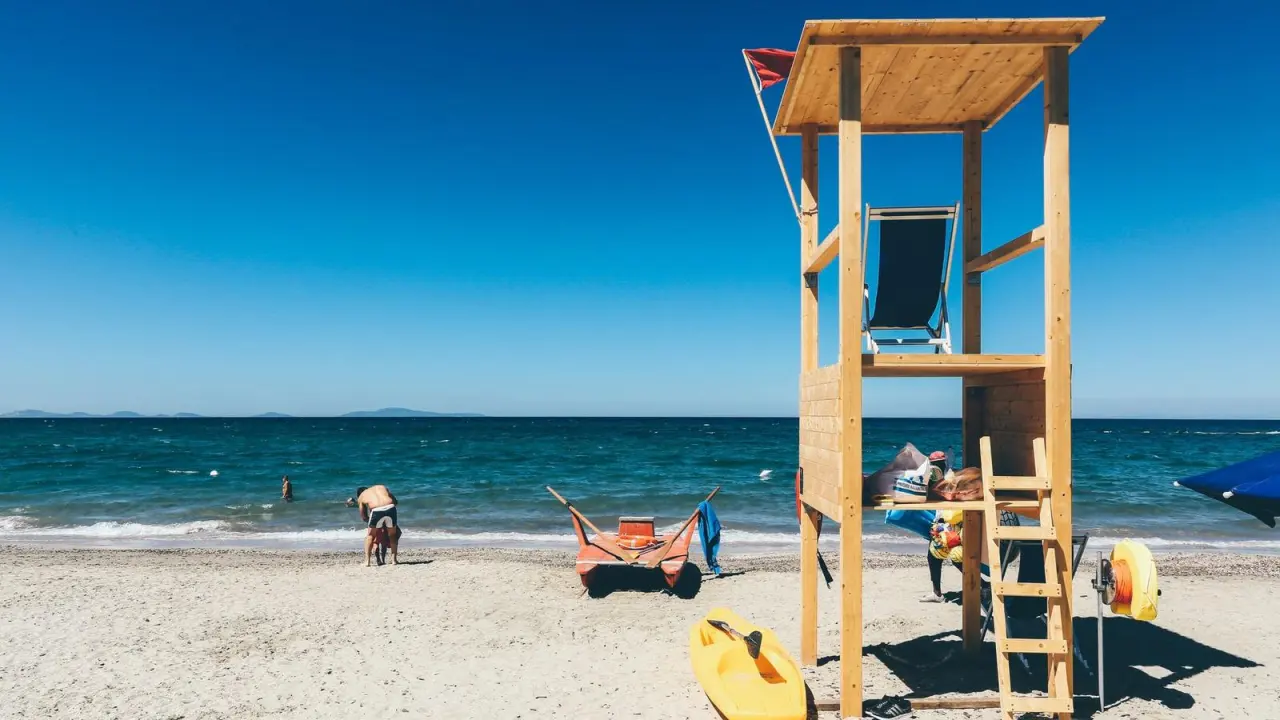
Flags matter. Mass General Brigham’s physician says that if the flag is red, don’t swim, and don’t let children swim when the risk is too high. The guide to the beach flag warning system explains how beach warnings work, and rip current safety covers the hazard behind many beach rescues. UF Health says to learn about rip currents and undertows and how to swim out of them, and to stay out of strong currents even if you are a strong swimmer.
Never swim alone, says UF Health, and never dive unless you know beforehand how deep the water is. University Hospitals gives at least 9 feet as the depth for children to dive, and says teens should enter unfamiliar water feet first. It also advises against swimming during thunderstorms.
Skill in a pool does not carry over automatically. Mass General Brigham notes that open water has waves, seaweed and other distractions that a calm pool does not. For place-specific advice, see lake swimming safety and river swimming safety. Longer swims are covered in open water swimming safety tips.
Boats, paddle sports and life jackets
On the water, a life jacket is the main piece of equipment. UF Health says to always wear life preservers when boating, even if you know how to swim. Mass General Brigham says everyone should wear one during water sports such as boating and paddle-boarding, and that it should fit well and be worn correctly.
Air-filled or foam toys such as wings, noodles and inner tubes are not a replacement for life jackets when boating or in open water, according to UF Health. Further advice is in the guide to boating safety life jackets, and paddlers can read kayaking safety tips.
- Do not overload the boat.
- If the boat turns over, stay with it until help arrives.
- Check local weather conditions and forecasts, and watch for dangerous waves.
- Keep children from swimming around boats or in areas where people are water-skiing, as University Hospitals advises.
Cold water adds its own danger on top of these basics. The hazards are explained in the guide to cold water shock.
How does water safety change from babies to teens?
Risks shift as children grow, and University Hospitals breaks them down by age group.
- Babies: most infant drownings happen in bathtubs, so the bathroom is the priority.
- Preschoolers: children in this group most often drown in swimming pools, often after wandering away from the house unnoticed. Fences, alarms and closed gates matter most.
- School-aged children: they are more likely to drown in oceans, lakes and rivers. Constant watching, no roughhousing that can be mistaken for drowning, and teaching them to stay calm and tread water if they drift from shore all help.
- Teens: overestimating their skills, unawareness of currents or depth, alcohol or drugs and peer pressure raise the risk. The advice is a buddy every time and never swimming or diving under the influence.
Swim lessons help but are not a complete answer. Mass General Brigham cautions that teaching your kids to swim is important, but it’s not 100% protective and can give a false sense of security.
Learning CPR is the other common recommendation. University Hospitals says training is available through the American Red Cross, the American Heart Association and local hospitals or fire departments.
Frequently asked questions
How close should I stay to a young child in water?
Show answer
Within arm’s reach. Mass General Brigham says the supervising adult should be within arm’s reach of toddlers and young children at all times, and Cincinnati Children’s says an adult should be in the water, within arms’ reach, of any child who cannot swim independently.
Does a child who can swim still need watching?
Show answer
Yes. Mass General Brigham says teaching your kids to swim is not 100% protective, and Stanford says never to leave a child unattended around any body of water, even if the child knows how to swim.
Are floaties or water wings enough?
Show answer
No. Stanford says floatation devices are not a substitute for touch supervision and that blow-up devices can deflate. UF Health says air-filled or foam toys are not a replacement for life jackets in open water.
Is it safe to swim alone if I’m a strong swimmer?
Show answer
UF Health’s advice is never to swim alone, and to stay out of strong currents even if you are a strong swimmer.
What should I do about CPR?
Show answer
Take a course. Stanford says to learn CPR and to start with rescue breaths before chest compressions in drowning victims, but a certified instructor can confirm the method to use.